
Proving Precision Drying with Desiccant Dehumidification
Rental Dehumidifier Case Study
PROJECT AT A GLANCE
Client: Carnivore Pet Kitchen (CPK)
Application: Commercial drying of high protein pet food gummies
Challenge: Existing conveyor belt drying was achieving water activity of approximately 0.90 aw against a target of 0.75 aw
Trial solution: Rental desiccant dehumidifier combined with a 20 kW packaged air conditioning unit
Dry air condition: Approximately 30% RH during the initial trial setup
Initial result: 0.63 aw achieved on the first production run
Production results: Approximately 0.60-0.78 aw across subsequent larger scale trials
Outcome: Required launch production completed while CPK refined its commercial drying process
Next step: Permanent dehumidification system under consideration
With more than 20 years of experience in the pet food industry, Doug from Carnivore Pet Kitchen (CPK) knows pet food manufacturing inside and out. But when CPK began developing a new high protein, collagen rich gummy product, the drying process presented a new challenge.
The product had significant commercial potential, with CPK securing an exclusive agreement with one of Australia’s major supermarket retailers. With a launch deadline approaching, the challenge was developing a production process capable of achieving the required water activity at commercial scale.
The challenge
During initial batch testing using dehydrators, CPK established a target water activity (aw) of 0.75 for the finished gummies.
However, when production moved to a commercial conveyor belt dryer, CPK was unable to replicate the same level of moisture removal. The gummies were consistently leaving the dryer too wet, with water activity readings around 0.90 aw.
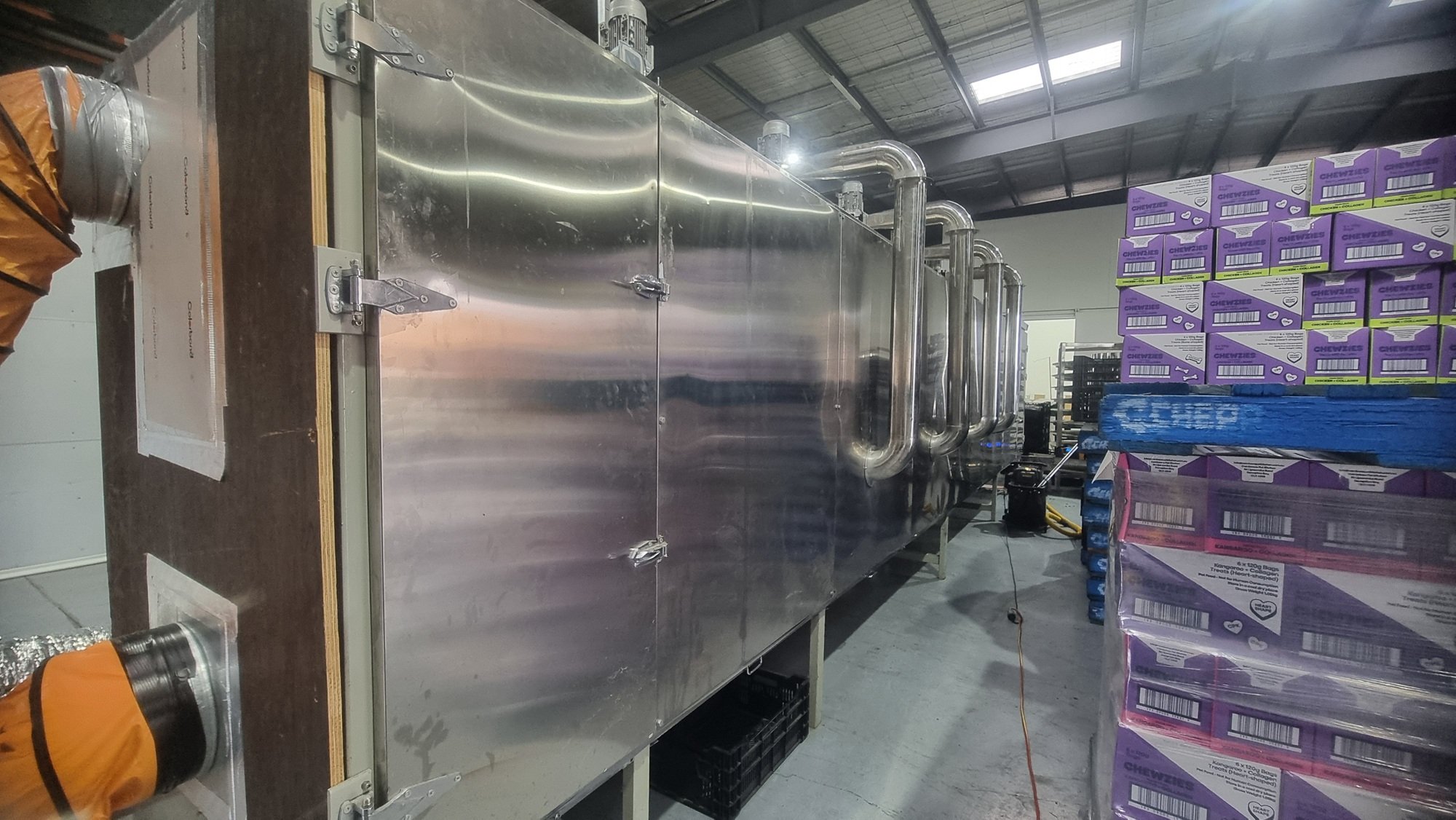
CPK’s commercial conveyor belt dryer used for production scale gummy drying.
After speaking with industry peers, Doug learned that desiccant dehumidification had been successfully used for similar drying applications.
While researching potential suppliers, he came across Humiscope. The availability of rental equipment was particularly attractive, giving CPK an opportunity to test the technology at production scale before committing to the capital cost of a permanent system.
Developing the drying solution
Following discussions with Humiscope’s humidity control specialists, it became clear that achieving the required result would require careful control of both drying and cooling conditions.
Humiscope arranged a desiccant dehumidifier together with a 20 kW packaged air conditioning unit for an on-site trial.
The temporary system was installed using flexible ductwork, allowing dry air to be introduced into CPK’s existing drying process without requiring permanent changes to the facility.
The initial setup supplied dry air at approximately 30% relative humidity. Because the desiccant drying process also introduces heat, a packaged air conditioning system was used to balance the temperature and provide additional environmental control towards the end of the process.
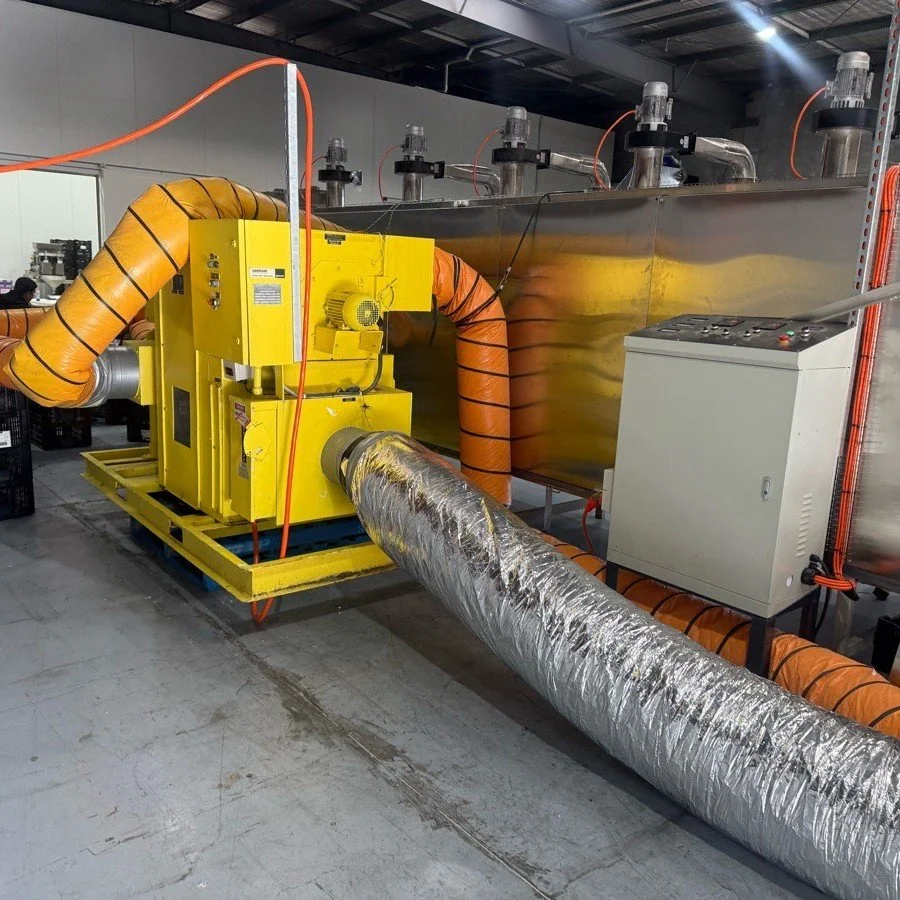
Rental desiccant dehumidifier
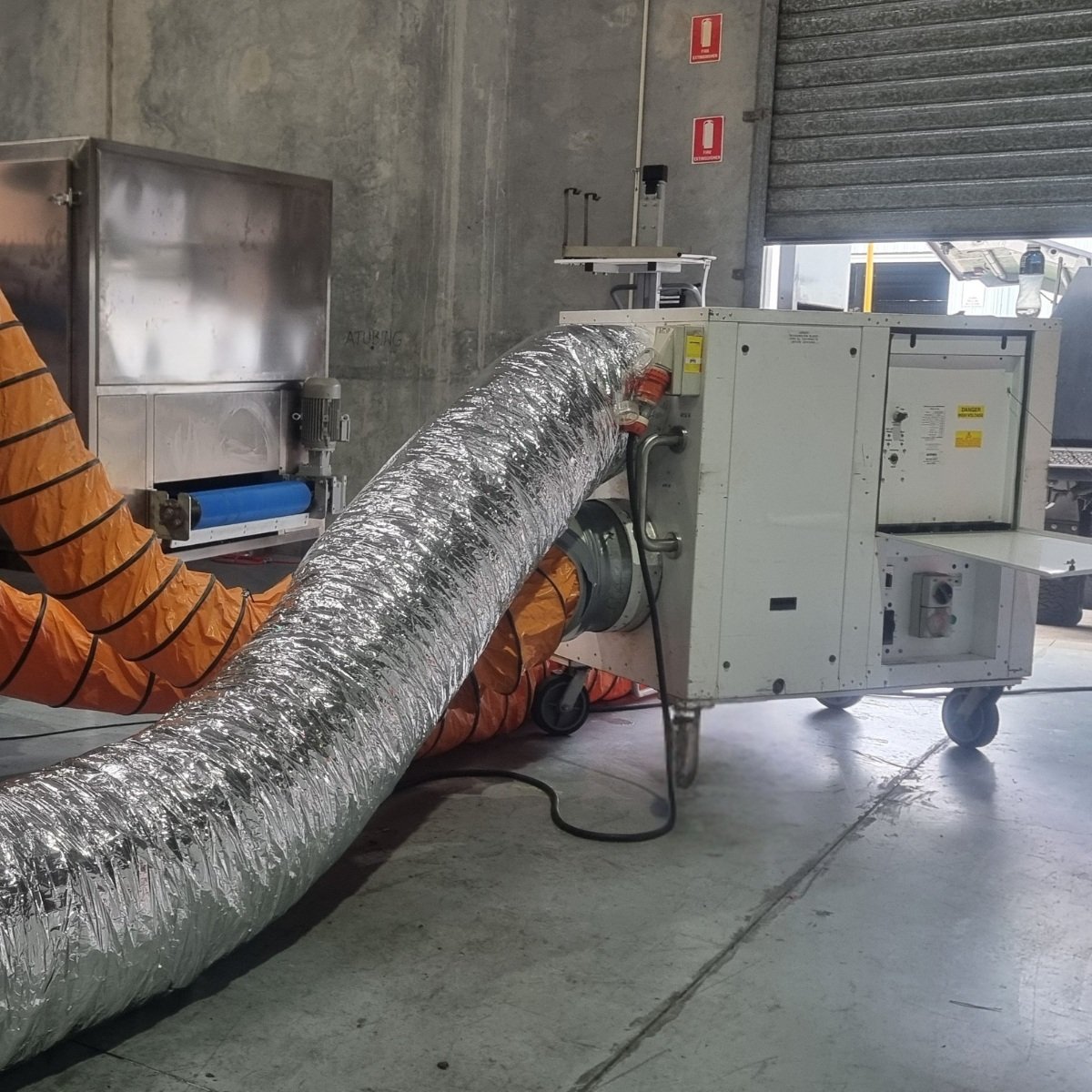
Rental 20 kW packaged air conditioning unit
Immediate results and fine tuning
The impact was immediate.
On the first production run, the gummies achieved a water activity of 0.63, significantly below CPK’s target of 0.75. This demonstrated that the temporary system was capable of achieving moisture removal beyond the initial target under the trial conditions, while also highlighting the need to fine tune the drying conditions for the product.
Using the dehumidifier’s controller, Doug was able to adjust the system settings up or down and progressively refine the amount of dry air being supplied to the process. The packaged air conditioning unit was also independently controllable, giving CPK further flexibility to adjust the cooling conditions.
With control over both systems, CPK could run large scale production trials and test different combinations of drying and cooling to determine what worked best for the gummies.
Rather than simply proving that desiccant dehumidification could achieve the required moisture removal, the rental setup gave CPK a practical way to test, learn and refine the process under real production conditions.
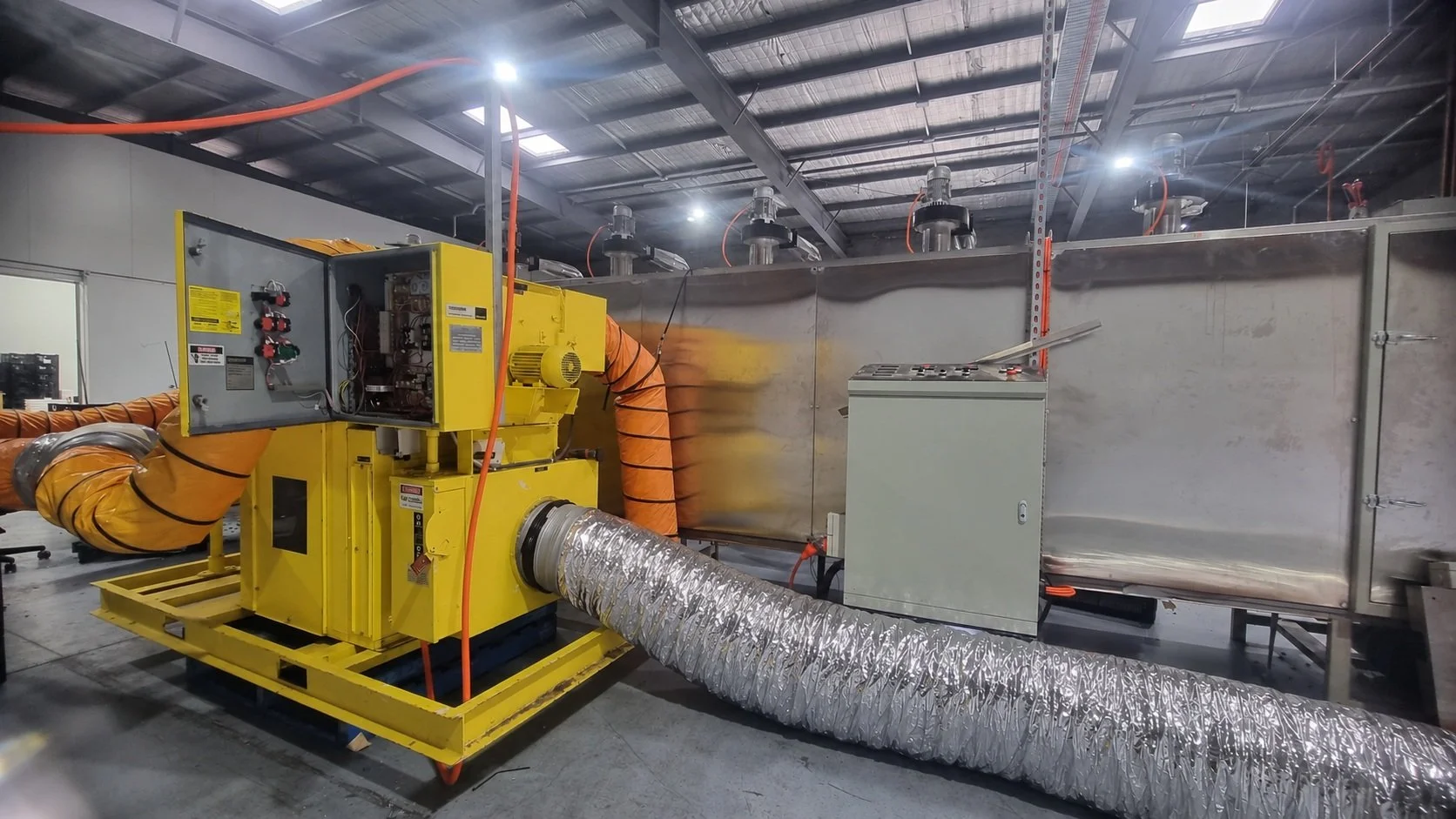
Rental desiccant dehumidifier connected to CPK’s commercial belt dryer using flexible ductwork to supply controlled dry air during production trials.
From trial to production
Over the following weeks, CPK continued testing different settings and refining its production process.
Water activity readings across the larger production runs have ranged from approximately 0.60 to 0.78 aw. While Doug says consistency is still being fine tuned, the results represent a substantial improvement from the initial readings of around 0.90 aw achieved with the belt dryer alone.
Most importantly, CPK was able to successfully manufacture all of the product required for its October launch.
The production trials have also helped CPK better understand what can be achieved with its existing belt dryer and desiccant setup. The team is now experimenting with elements of the product recipe while considering the optimum dryer configuration for future production.
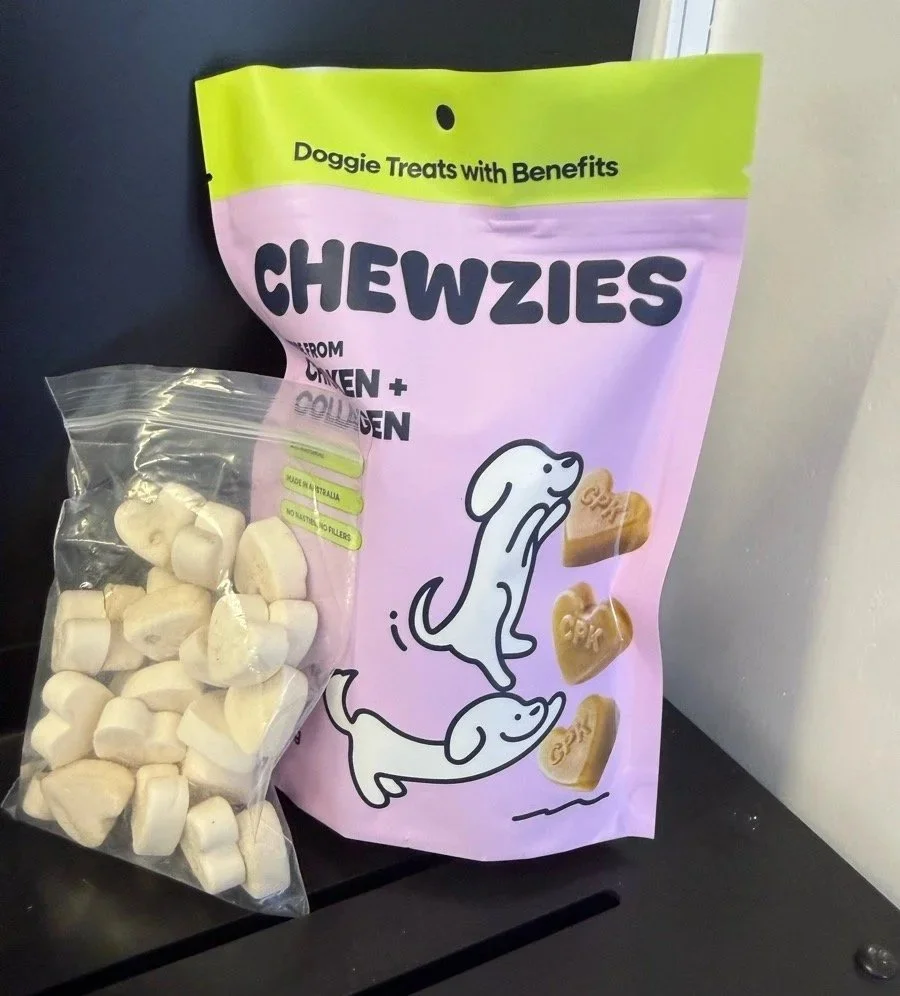
CPK's high protein gummy pet treats produced during the commercial drying trials.
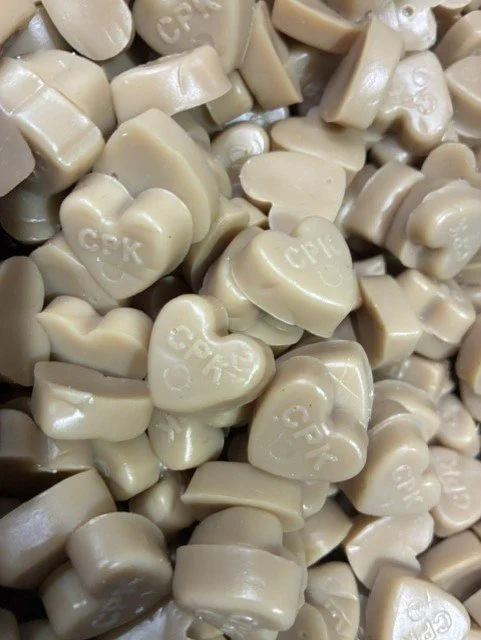
New high protein, collagen rich dog treat gummies
Test and learn before investing
For Doug, one of the biggest advantages of Humiscope’s rental approach was the opportunity to prove the technology and learn from real production runs before making a major capital investment.
“The biggest benefit of being able to trial one first is definitely being able to test and learn before committing to the capital outlay of a new one”
With the trial demonstrating the effectiveness of controlled dry air in the production process, CPK is now considering the purchase of a permanent dehumidification system.
The final design will depend on whether CPK continues with its multi belt dryer or moves to an alternative rack or spiral configuration. One option under consideration is a dedicated drying room, with the dehumidifier supplying controlled dry air into the space.
For CPK, the trial has done more than prove that desiccant dehumidification can remove the required moisture. It has provided the practical data and production experience needed to make a more informed decision about the design of its future drying process.