

What Is The Difference Between Desiccant and Mechanical Refrigerant Dehumidification?
Desiccant or Refrigerant?
Dehumidifiers remove moisture from the air. There are two main types of dehumidifier technology that do this: Desiccant and Mechanical (refrigerator coil technology).
Would you like one of our expert technicians or engineers to visit you on site for an obligation free check of you current systems and advice on what dehumidification technology would best benefit your application?
Desiccant Dehumidifiers:
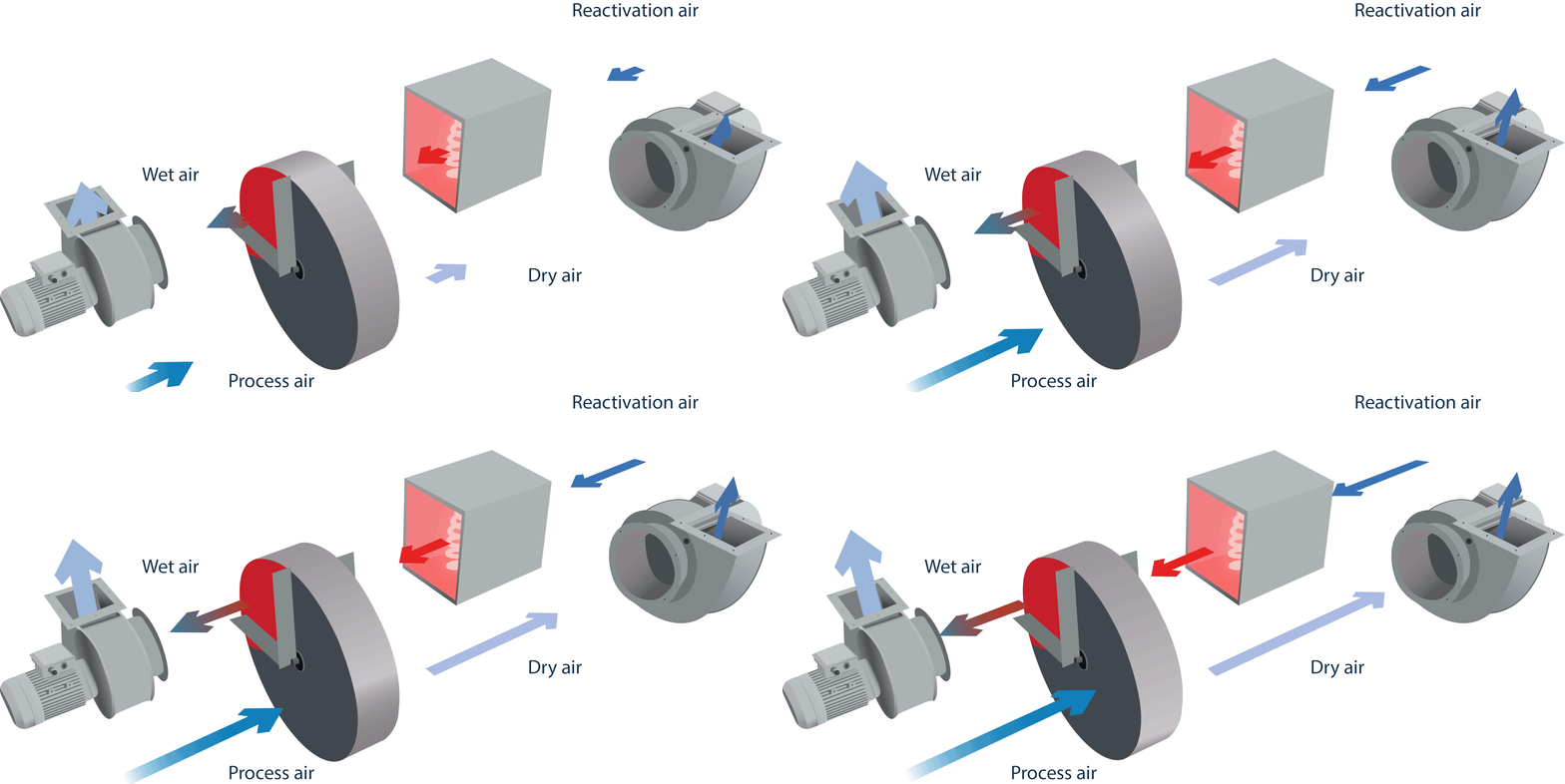
esiccant dehumidification works by passing air through a rotating desiccant wheel that extracts moisture. The wheel is coated with a hygroscopic material such as silica gel, which naturally absorbs water vapour, similar to the small packets found in new shoes or electronics.
As the wheel rotates, a small section moves through a regeneration zone. In this portion the desiccant is heated and the moisture is released and ducted out from the space. The reactivated section then returns to the process airstream to absorb more moisture.
See below the industries and applications that benefit from this technology
Mechanical (Refrigerant) Dehumidifiers:
In comparison, mechanical refrigerant dehumidifiers work in a similar way to a refrigerator. They usually work by drawing moist air over a refrigerated coil with a fan. The cold evaporator coil of the refrigeration device condenses the water, which is removed, and then the air is reheated by the condenser coil. The now dehumidified, warm air is released into the room.
Find out more about Refrigerant Dehumidifiers and what options there are for your industry
Comparing Performance:
The main benefit of a desiccant dehumidifier is that it performs exceptionally well when used in cooler temperatures, or when a low dew point is required. As there is no actual water produced during the process, these units can work effectively at sub-zero temperatures.
In comparison, mechanical (refrigerant) type units are more economical at higher temperatures i.e. 20 degrees C. They are also particularly useful in the early stage of flood restorations.

Before You Invest!
THINGS TO CHECK AND CONSIDER
we have come up with a check list of questions to ask and things you should consider when deciding to invest in a commercial dehumidifier.
WHAT IS HUMIDITY AND HOW IS IT MEASURED?
Want to know exactly what humidity is and the different ways it is measured? Read our “What is Humidity” blog.
Interesting note: while humans are more sensitive to temperature than relative humidity (RH) it is the opposite for inanimate objects. For example, when raw and unfinished materials are stored, temperatures can fluctuate boundlessly so long as the RH is always kept steady at approximately 50%. This stops corrosion, degradation and/or warping.