
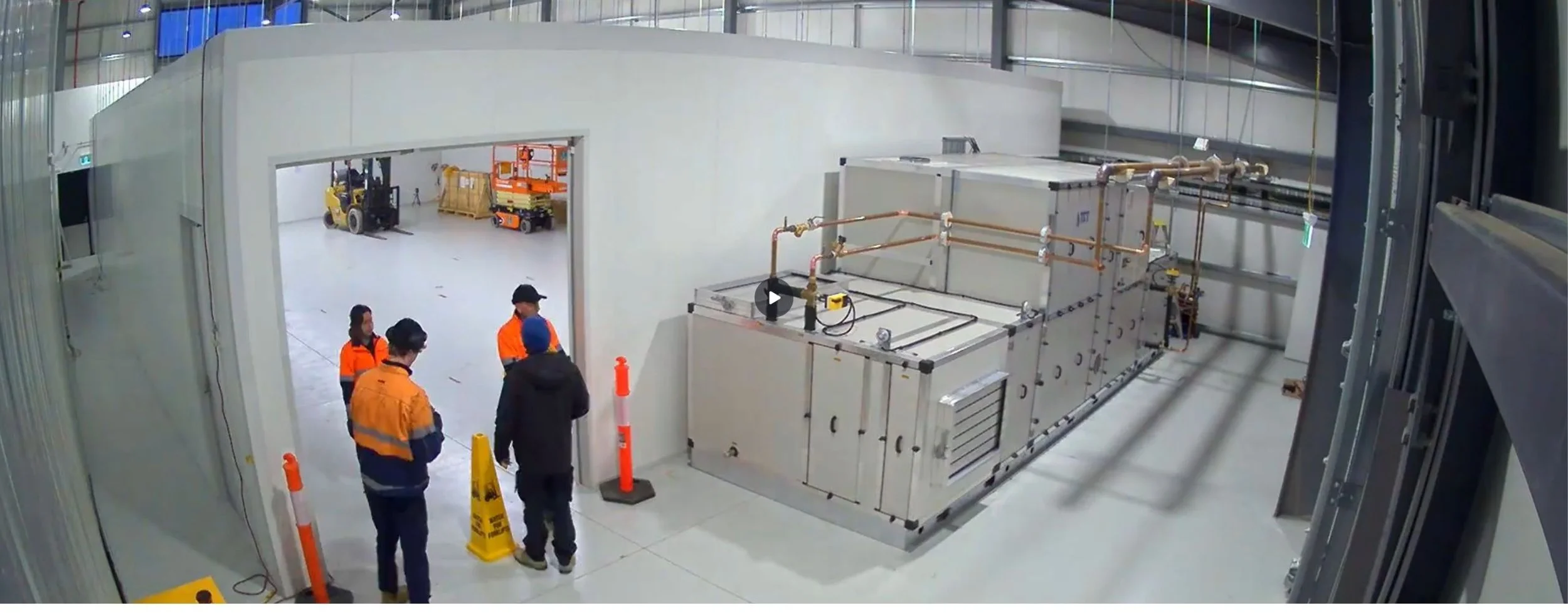
Commercial and Industrial Dehumidifier Installation Considerations
Selecting the right dehumidifier is only part of a successful humidity control project. How the system is installed can have a major impact on performance, reliability, energy use and ease of maintenance.
A correctly sized dehumidifier may still underperform if airflow is restricted, sensors are poorly located, drainage is inadequate, or the unit is installed where it cannot properly treat the space. For commercial and industrial applications, installation planning should be considered early in the design process, not left until after equipment has been selected.
This guide outlines the key factors to consider when installing a commercial or industrial dehumidification system.

Correct installation and commissioning help ensure the dehumidifier performs as designed.
1. Location Of The Dehumidifier
The dehumidifier should be installed where it can effectively draw humid air from the space and return dry air where it is needed.
Key considerations include available space, service access, drainage, airflow path, noise, heat gain and whether the unit needs to be protected from dust, washdown or process contamination.
2. In-room or Ducted Installation
Some dehumidifiers can be installed directly in the room being controlled. This can work well for smaller spaces, storage rooms, plant rooms and temporary drying applications.
Larger or more sensitive applications may require ducting to distribute dry air evenly, connect to existing HVAC systems, or allow the unit to be installed outside the controlled area.
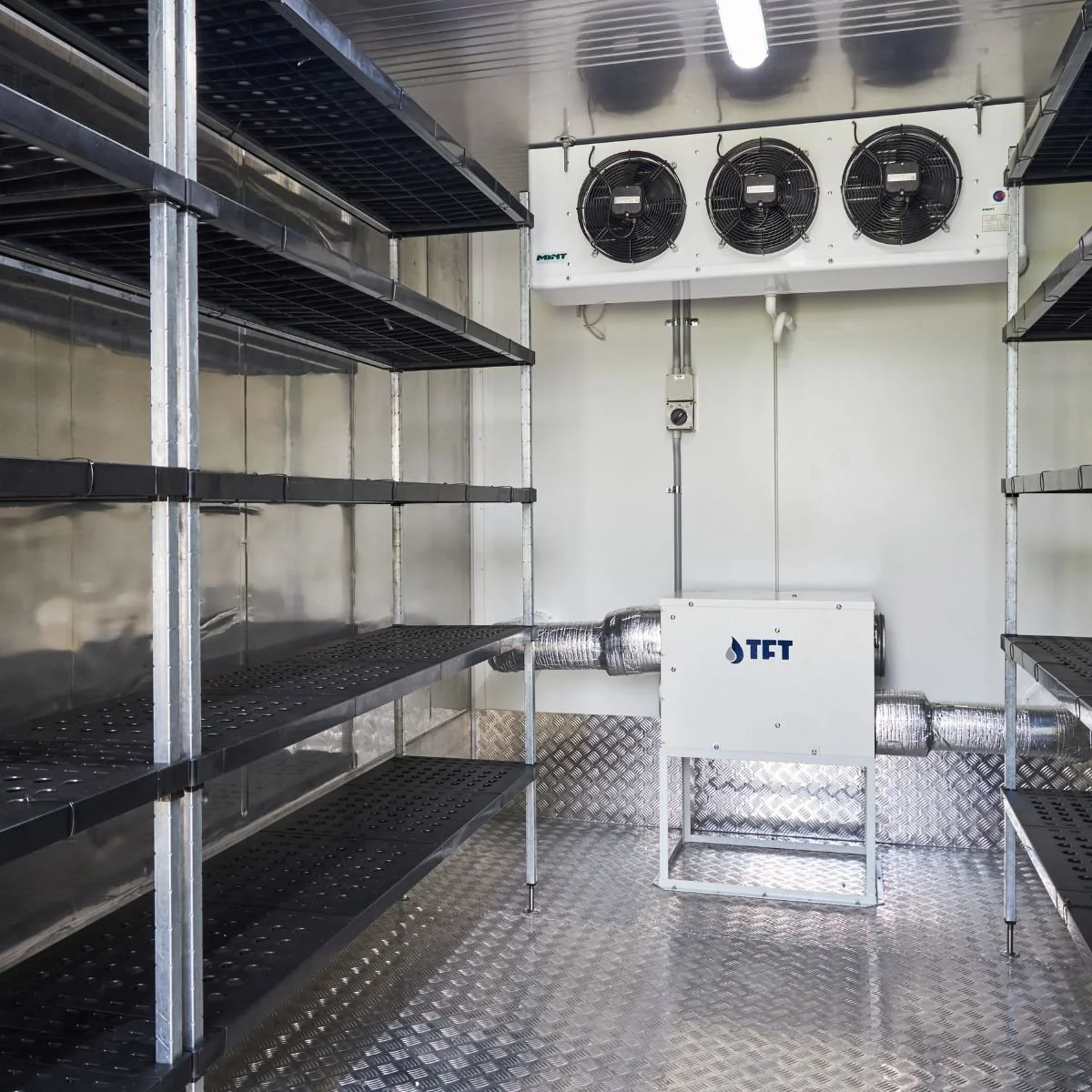
Dehumidifier installed directly within the controlled space
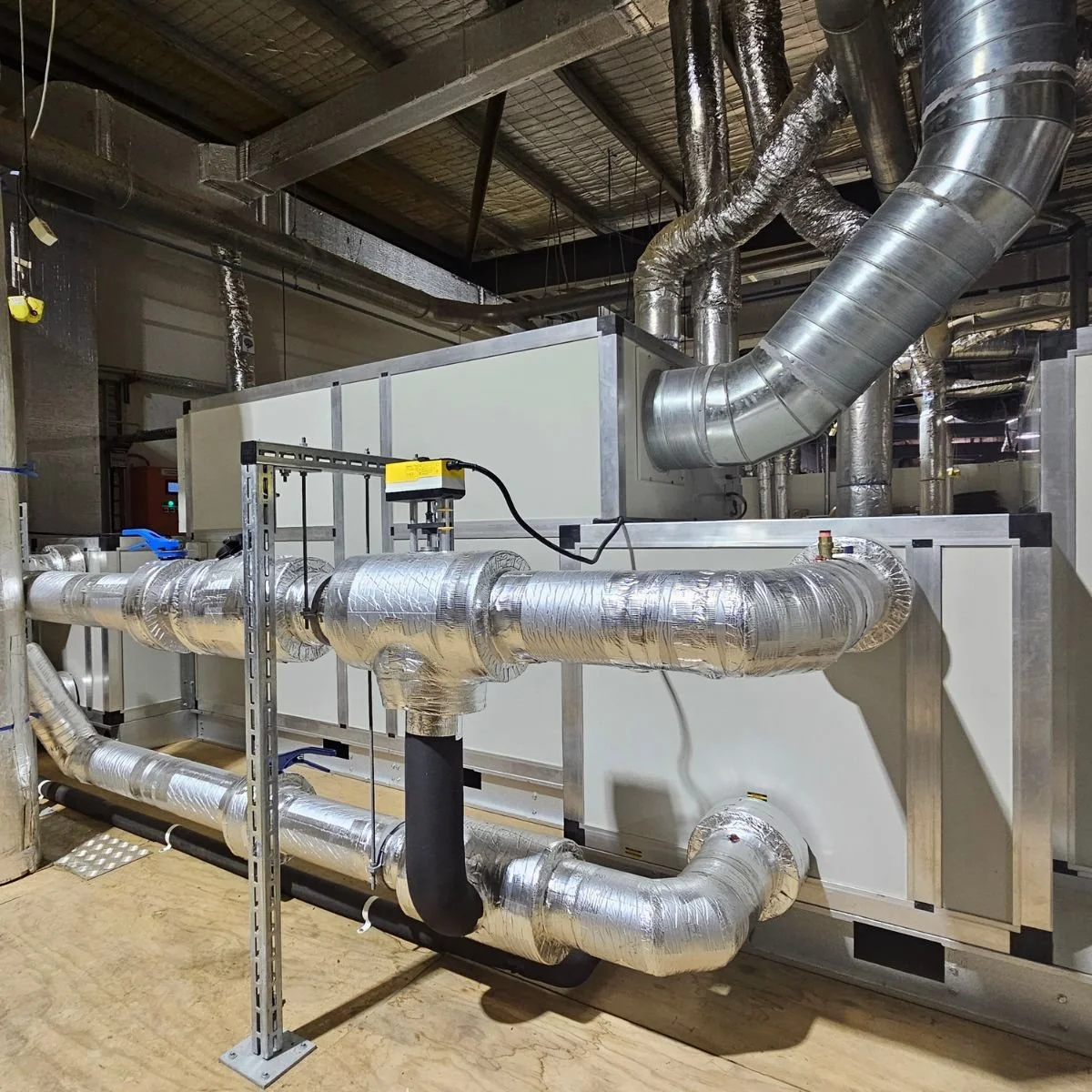
Ducted dehumidifier installation for controlled air distribution
3. Airflow and Air Distribution
Good airflow is essential for reliable humidity control.
The system must be able to collect humid air and distribute dry air without creating stagnant areas or short-circuiting between supply and return air. Room layout, racking, machinery, door openings and duct design can all affect performance.
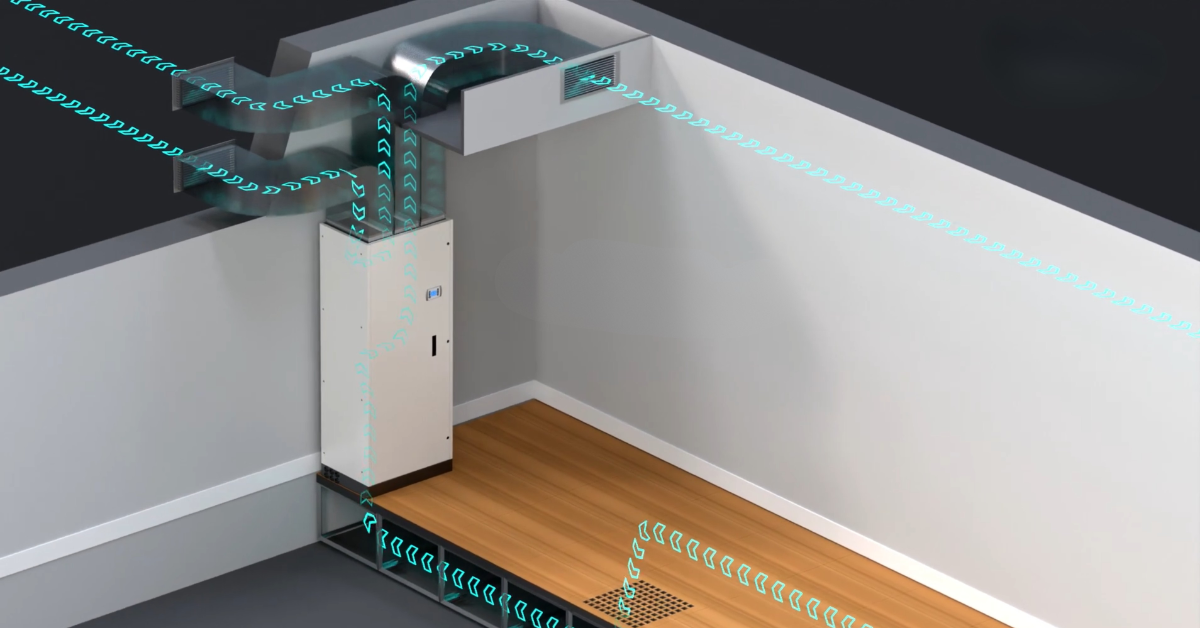
Airflow design should ensure humid air is collected effectively and dry air is distributed evenly throughout the controlled space.
4. Ducting Requirements
Ducting should be sized and arranged to maintain the required airflow through the dehumidifier.
Long duct runs, tight bends, undersized ducts and poorly positioned grilles can restrict airflow, increase noise and reduce system performance. For desiccant systems, regeneration air ducting must also be carefully planned.

5. Drainage
Where moisture is removed as water, reliable drainage is critical. This most commonly applies to refrigerant dehumidifiers, where condensate must be safely drained away.
The installation should allow for correct drain fall, traps where required, condensate pumps if needed, and easy access for inspection and cleaning. Poor drainage can lead to leaks, faults and water damage.
For desiccant systems, moisture is usually exhausted as wet air, although drainage may still be required where cooling coils or other condensate-producing components are included.
6. Sensor Location
Humidity sensors should be placed where they measure the true room condition.
Avoid locations directly in the supply air stream, near doors, close to heat sources, in stagnant corners or in areas exposed to washdown or damage. Larger or more sensitive spaces may need remote or multiple sensors.
7. Temperature and Heat Management
Dehumidifiers can add heat to the space.
In some applications this is useful, but in temperature-sensitive rooms it may need to be managed through cooling, heat rejection, heat recovery or integration with the HVAC system.
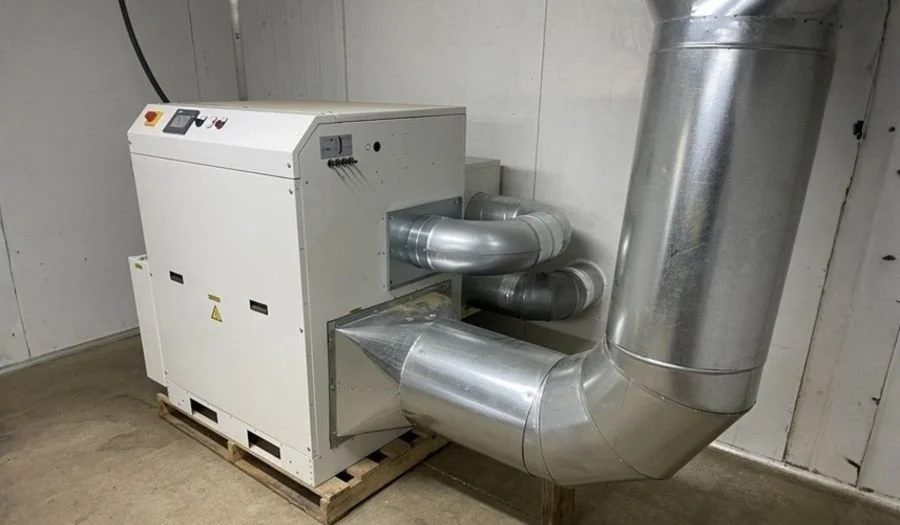
Heat recovery and HVAC integration may be required where temperature control is important.
8. Access for Maintenance
The system should be installed with enough space for routine inspection and servicing.
Allow access to filters, coils, fans, rotors, belts, electrical components, drains and sensors. Good service access helps maintain performance and reduce downtime.
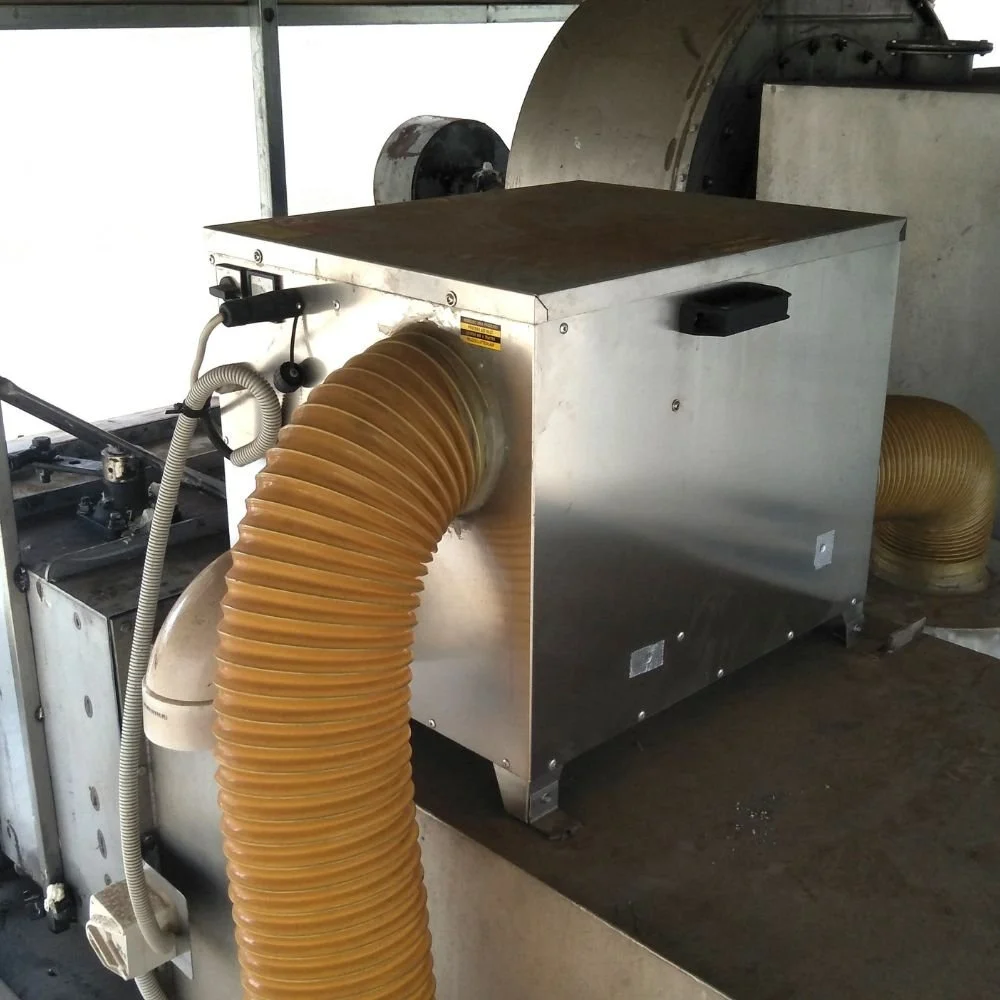
Allow adequate clearance for inspection and maintenance access.
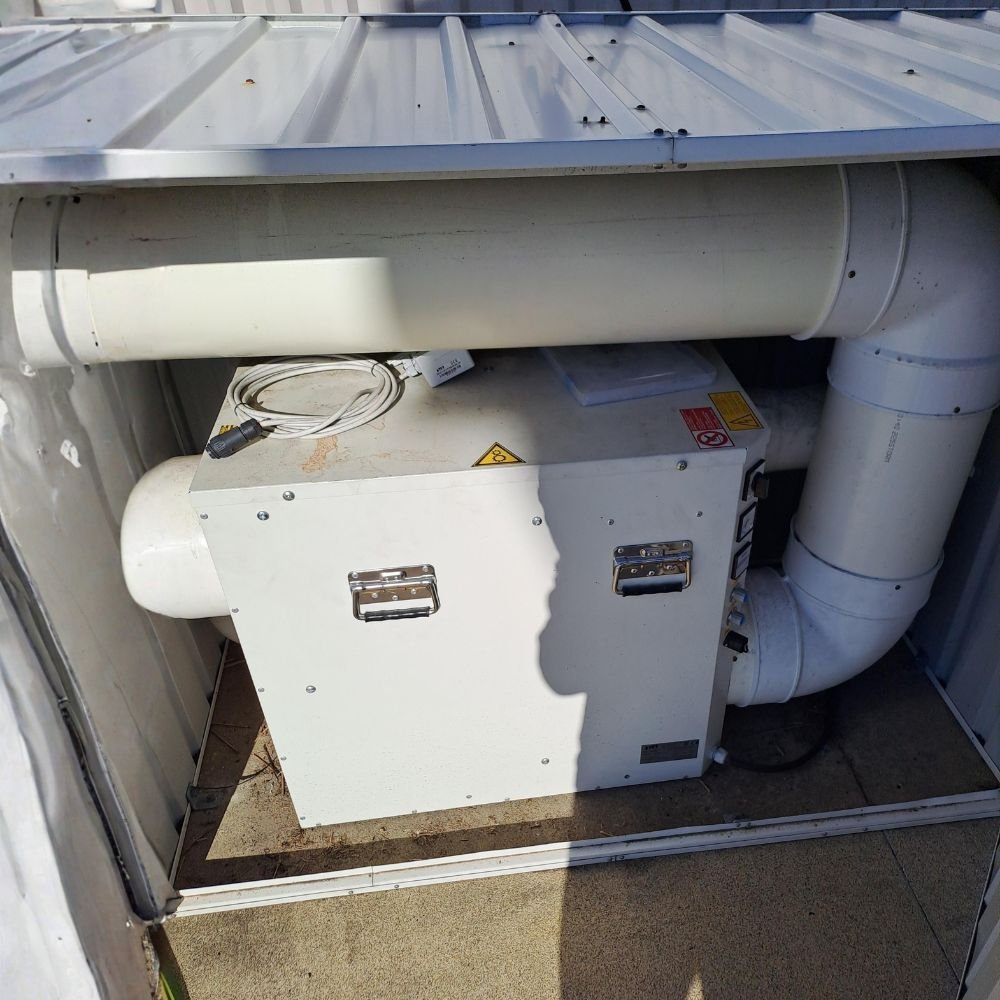
Restricted access can make routine servicing more difficult.
9. Refrigerant and Desiccant Installation Differences
Refrigerant dehumidifiers are often simpler to install and may only require power, drainage and suitable airflow.
Desiccant dehumidifiers usually need more planning because they have process air and regeneration air streams. This may involve additional ducting, exhaust air, heating energy, cooling or heat recovery.
refrigerant Dehumidifier Installation
Simpler installation with drainage required
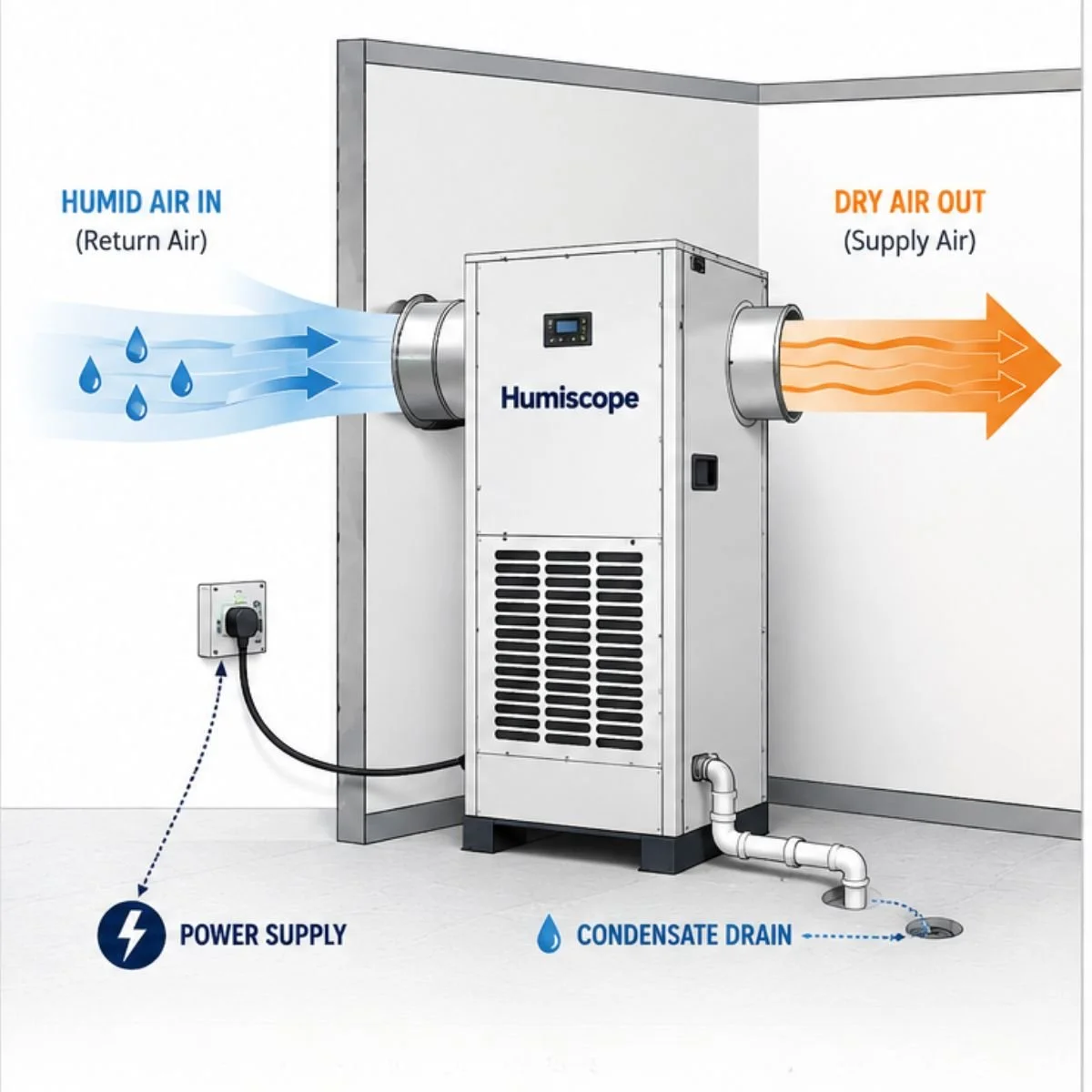
Humid air passes over a cold coil. Moisture condenses and drains away. Dry, conditioned air is supplied back to the space.
Desiccant Dehumidifier Installation
More Complex airflow arrangement with regeneration air
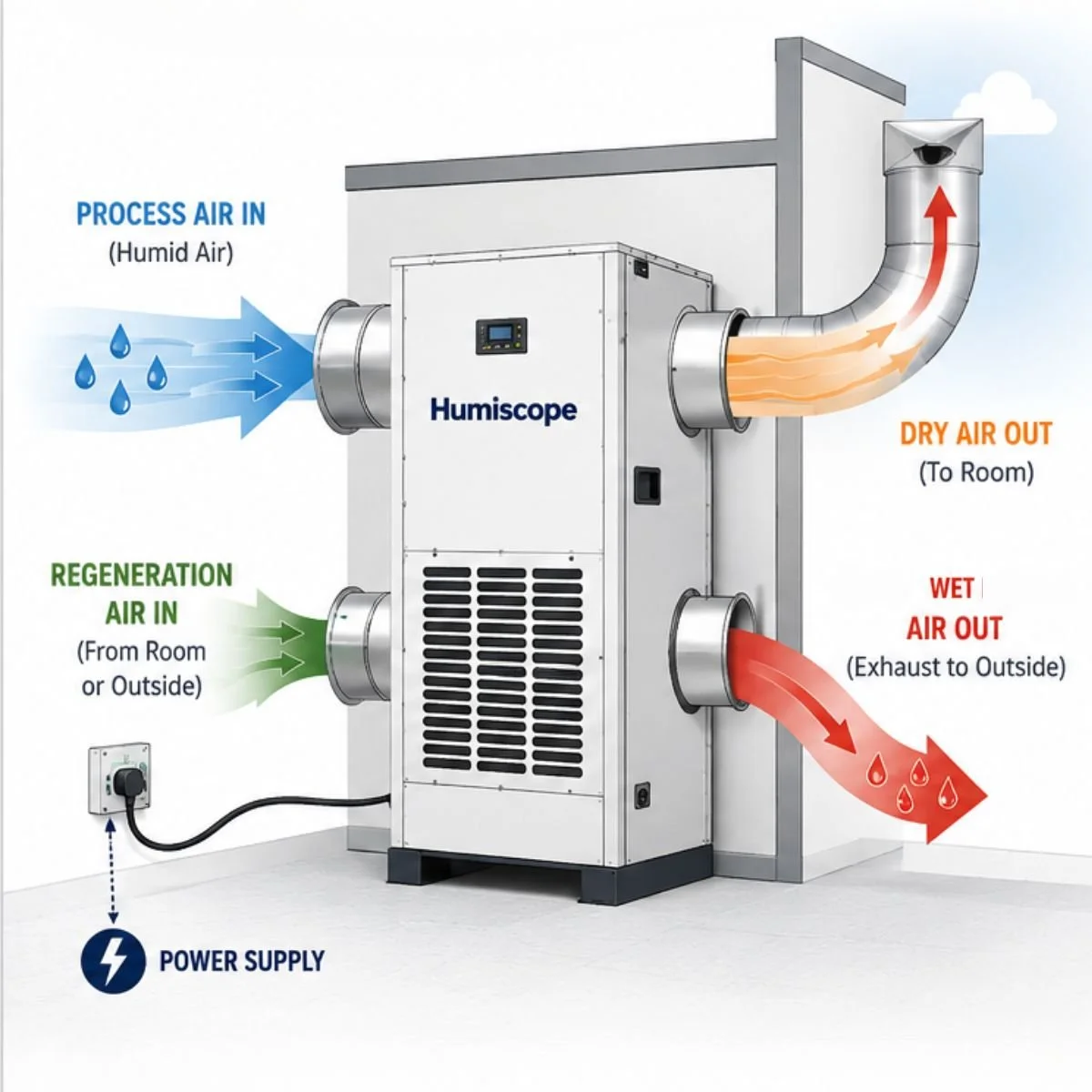
A desiccant rotor removes moisture from the process air. Regeneration air is heated and used to remove the moisture from the rotor, then exhausted outside.
10. Controls and Integration
The control system should suit the application.
Simple projects may only need basic humidity control. More critical environments may require temperature integration, alarms, BMS connection, remote monitoring, data logging or tighter control tolerance.
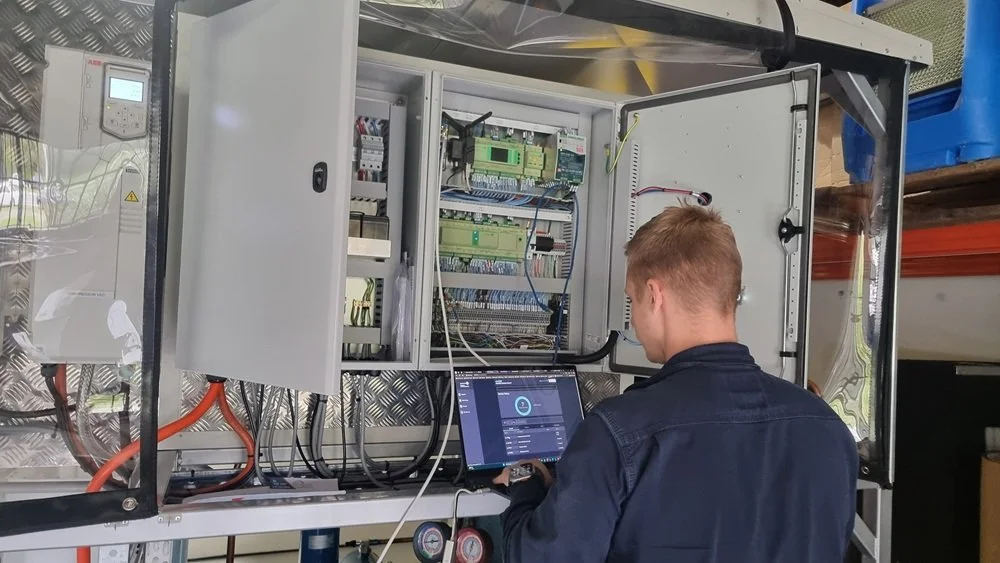
Controls, alarms and remote monitoring can help maintain stable humidity conditions in critical environments
11. Commissioning
Commissioning confirms the system has been installed correctly and is performing as intended.
This should include checking airflow, drainage, sensors, controls, alarms, operating settings and whether the system is moving toward the required humidity and temperature conditions.
Regular servicing and maintenance helps improve energy efficiency, maintain system performance, reduce breakdowns and extend equipment life.
Find out more about Humiscope’s dehumidifier servicing. We service most major dehumidifier brands, regardless of make or model.
Common Installation Mistakes
Common issues that can affect dehumidifier performance include:
Installing the unit where air cannot circulate properly
Undersized or restrictive ductwork
Poor return air location
Sensor installed in the wrong location
Inadequate condensate drainage
Ignoring heat added to the room
Poor access for servicing
Not allowing for door openings or air leakage
Treating humidity control separately from HVAC design
Not commissioning the system against the required conditions
Avoiding these issues can improve performance, reduce energy use and extend equipment life.
How Humiscope Can Help
Humiscope helps commercial and industrial clients plan, design and supply dehumidification systems that are suited to the application and installation environment.
We consider room conditions, humidity targets, airflow, ducting, drainage, temperature impact, technology selection and maintenance access before equipment is selected.
The right installation approach helps ensure the system does more than remove moisture. It helps deliver reliable, efficient and practical humidity control for the life of the system.
Planning a commercial dehumidifier installation?
Speak with Humiscope about your application, site conditions and humidity target. We can help you select and design a system that is practical to install, simple to operate and suited to the environment.