Blast Freezers Without Ice, Fog or Condensation
Desiccant Dehumidification for Industrial Meat Processing
Observed outcome:
Ice build-up eliminated on conveyors and structures inside operating blast freezers, without changes to refrigeration capacity or freezer setpoints.
Context:
This project was delivered in a live Australian meat processing facility to reduce ice accumulation, defrost downtime, safety risk, and mechanical wear within a critical blast freezer corridor.

The Engineering Problem
What was happening
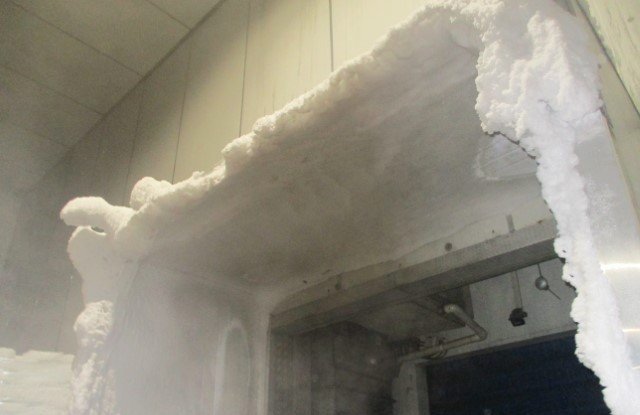
Moist air ingress into blast freezer corridors and process zones
Dewpoint above critical surface temperatures
Ice accretion on:
Conveyors and drives
Structural steel and services
Floors and access ways
Operational impact
Unplanned defrost cycles
Conveyor damage and misalignment
Manual ice removal
Increased safety risk
Production interruptions
Before / After (Observable, Not Theoretical)

Before Dehumidification

After Dehumidification
The Intervention
System approach
Industrial desiccant dehumidifier installed upstream of the affected freezer corridor
Targeted dewpoint suppression, not RH control
Air delivery engineered to prevent condensation at steel, conveyor, and equipment surfaces
Key point for engineers
Refrigeration capacity was not increased.
Ice reduction occurred through sublimation and prevention, not defrost escalation.
Installation Constraints
This was not a greenfield project.
Constraints encountered:
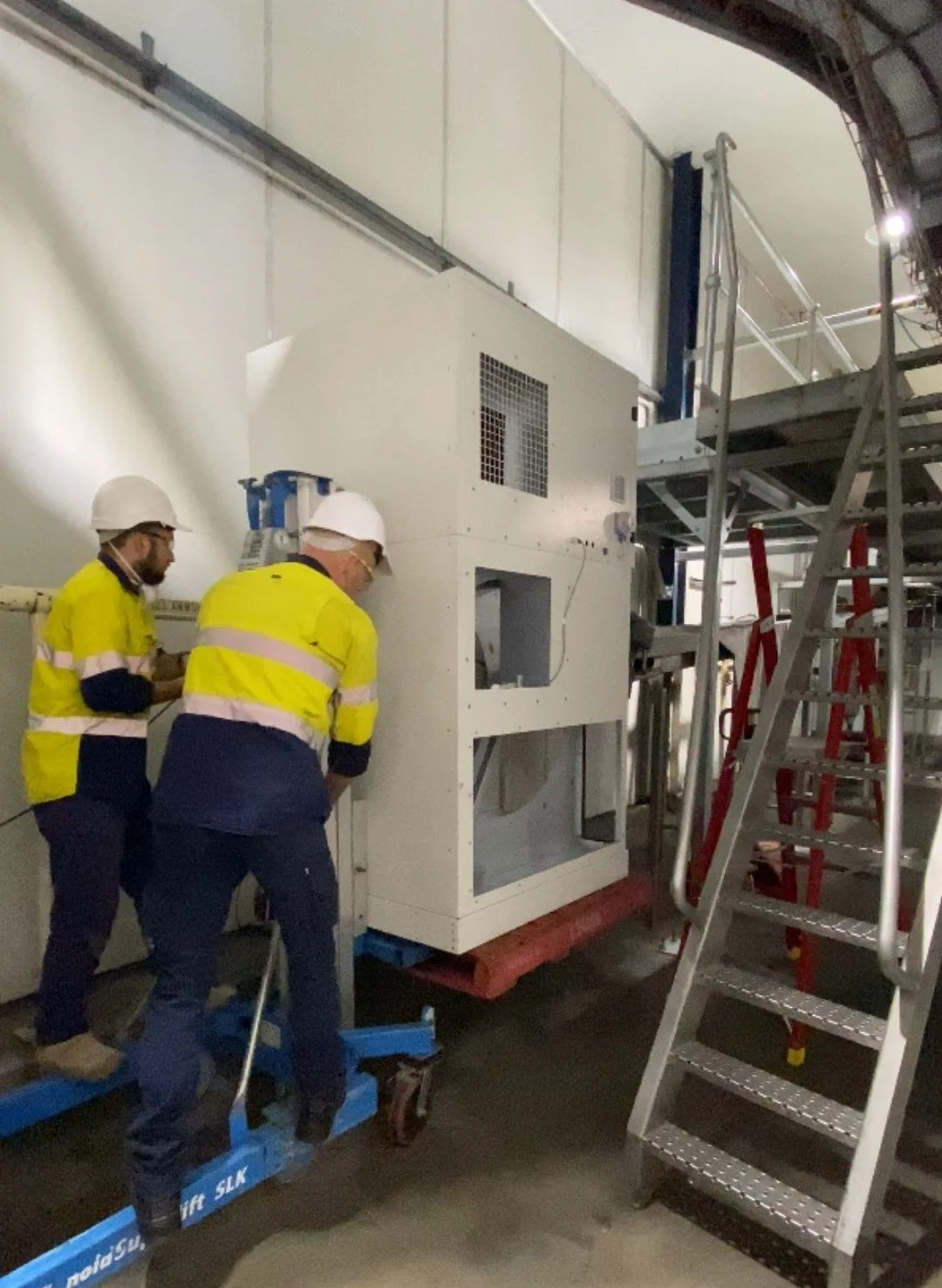
No forklift or heavy lifting access
Restricted space with complex services
Minimal allowable downtime (blast freezer integral to production)
No hot works permitted (food safety)
How it was addressed:
Equipment modularised and reassembled in-situ
3D scanning used to confirm fit and clearances
Weekend installation windows
Cold-safe, non-powered tooling only
Measured Results (Post-Commissioning)
Environmental change:
Process area humidity reduced from 60–80% to ~20%
Dewpoint lowered below all critical surface temperatures
Operational outcomes:
Ice accumulation eliminated
Defrost cycles dramatically reduced
Conveyors no longer damaged by ice expansion
Floors dry → safer access
Energy consumption reduced (less defrost, less ice load)
Additional Engineering Benefits
Reduced mechanical stress on conveyors and drives
Improved personnel safety
Packaged product no longer iced
Lower ongoing operating cost
More stable freezer operation
Where This Typically Makes Sense
This solution is most effective where:
Blast freezers or spiral freezers suffer repeat ice build-up
Fogging or condensation occurs during door openings
Automation reliability is affected by moisture
Refrigeration systems are already correctly sized
Want to sanity-check whether this applies to your site?
A short technical discussion focused on dewpoint, air paths, and freezer interfaces. No obligation, no redesign assumptions.
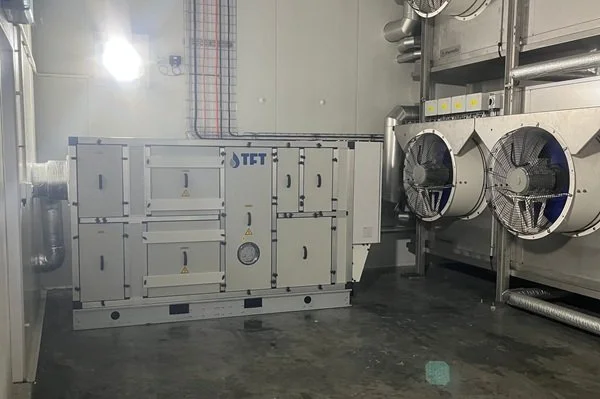
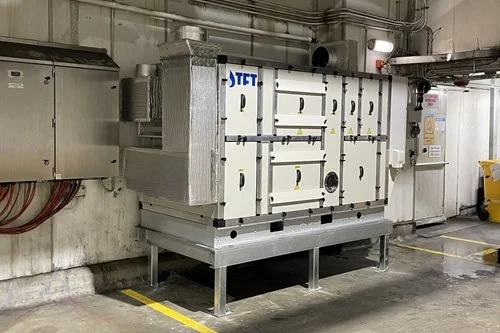
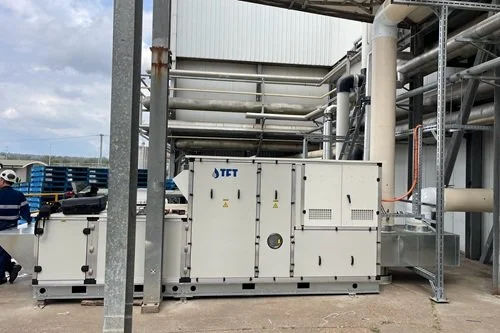
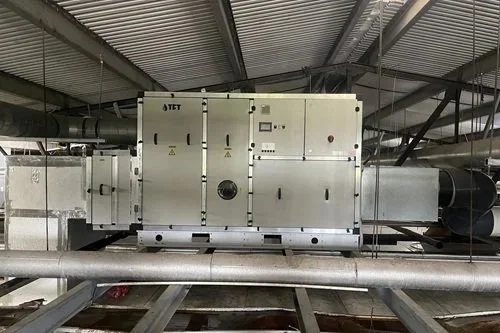
Recent Industrial Freezer Dehumidification Installations
Desiccant dehumidification systems integrated into live blast freezer and cold process environments across Australia.